
Create blog posts
Publish articles for SEO and trust with the built-in blog sections.
Where to find it in Launchmiga
Builder top bar > Content menu > Blog > New post.
Why create blog posts matters
Publish articles for SEO and trust with the built-in blog sections. For a gym, yoga studio, pilates studio, personal trainer, CrossFit box, or other fitness business, this task is part of the full website conversion path: visitors need to understand the offer, trust the business, and know exactly what to do next. Use this page as a practical manual, not just a quick checklist. The workflow lives in Builder top bar > Content menu > Blog > New post.. When you update this part of the site, also check the mobile version, the primary CTA, the live visitor experience, and whether the page still supports your main goal: trial requests, intro class bookings, contact messages, or membership enquiries.
SEO, clarity, and conversion best practices
Keep the visible copy specific and searchable. Use plain phrases your customers would type into Google, such as gym in [city], yoga studio [city], personal trainer [city], pilates classes, trial class, membership prices, class schedule, beginner friendly training, or local fitness coaching. Relevant internal search tags for this guide include: blog, article, content, seo. After you make the change, review the surrounding page. The visitor should see a clear headline, supporting proof, useful details, and a next step. For this workflow, focus on Enable blog access, Compose a post, Add each language version, Choose sharing channels and Publish the post. If the task changes what appears on a published page, publish again and test the live URL in a fresh browser tab.
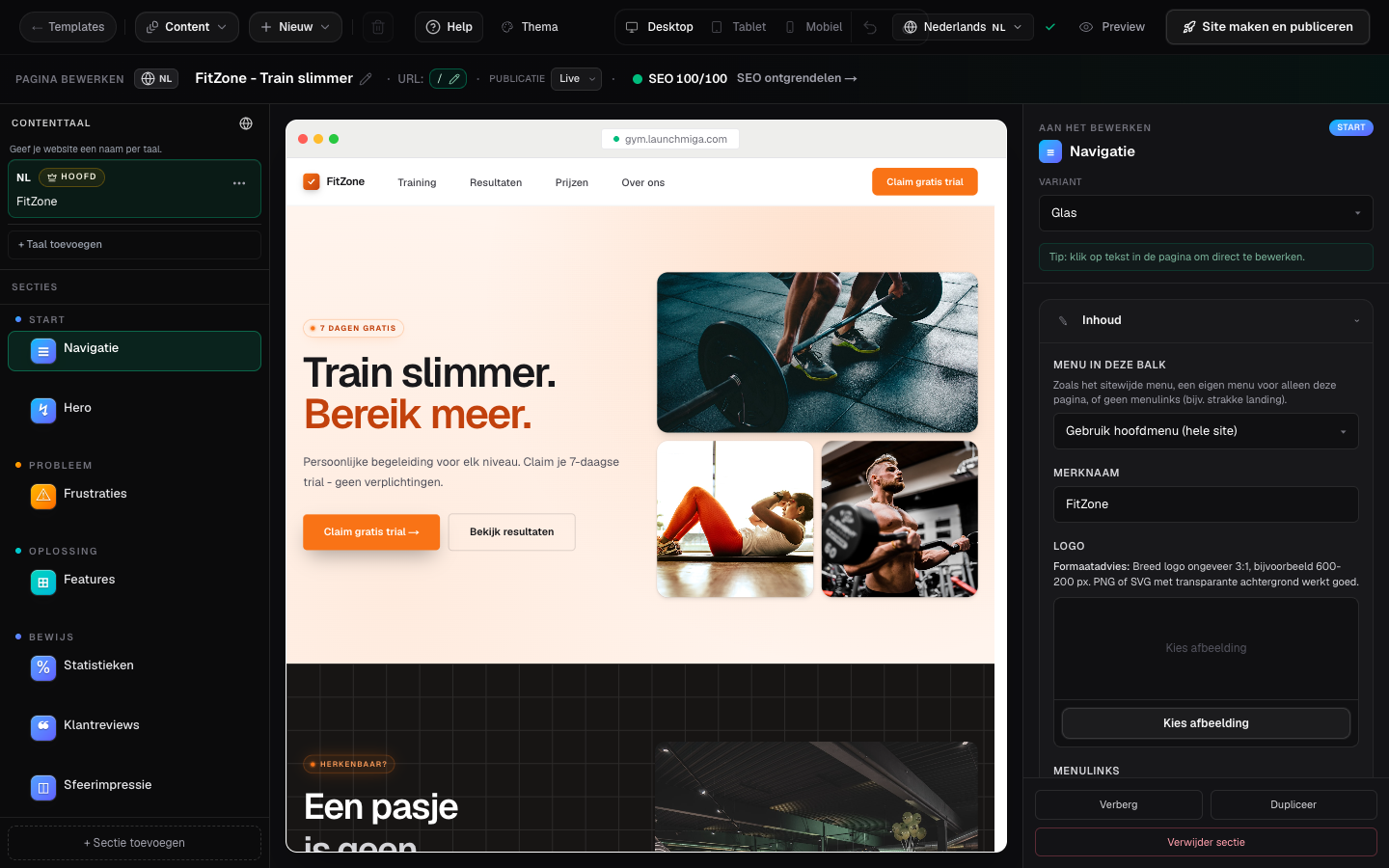
- 1
Enable blog access
Blog requires the blog module on your plan. Check Admin > Modules if you do not see Blog. Practical example 1: on a gym landing page, place the hero and proof section first, then pricing, FAQ, and lead form. Visitors should understand the offer before you ask for a trial request. When you finish this step, read the page as a visitor who searched for a local fitness solution. The copy should answer what this is, who it is for, why it is trustworthy, and what to do next.
- 2
Compose a post
Add title, excerpt, and body sections. Set a featured image for social sharing. Practical example 2: on a gym landing page, place the hero and proof section first, then pricing, FAQ, and lead form. Visitors should understand the offer before you ask for a trial request. When you finish this step, read the page as a visitor who searched for a local fitness solution. The copy should answer what this is, who it is for, why it is trustworthy, and what to do next.
- 3
Add each language version
Use the Blog languages bar above the canvas to switch languages. Each active site language has its own blog overview and articles. Select Add translation for a missing version, translate its title, excerpt, body, and SEO settings, then publish that language separately. Practical example 3: on a gym landing page, place the hero and proof section first, then pricing, FAQ, and lead form. Visitors should understand the offer before you ask for a trial request. When you finish this step, read the page as a visitor who searched for a local fitness solution. The copy should answer what this is, who it is for, why it is trustworthy, and what to do next.
- 4
Choose sharing channels
Under Article footer, enable Share controls and choose which buttons visitors see: copy link, Facebook, LinkedIn, X, and email. Practical example 4: on a gym landing page, place the hero and proof section first, then pricing, FAQ, and lead form. Visitors should understand the offer before you ask for a trial request. When you finish this step, read the page as a visitor who searched for a local fitness solution. The copy should answer what this is, who it is for, why it is trustworthy, and what to do next.
- 5
Publish the post
Publish like a normal page. Posts appear on your blog index automatically. Practical example 5: on a gym landing page, place the hero and proof section first, then pricing, FAQ, and lead form. Visitors should understand the offer before you ask for a trial request. When you finish this step, read the page as a visitor who searched for a local fitness solution. The copy should answer what this is, who it is for, why it is trustworthy, and what to do next.